Child & Educational Psychology assessment in Norfolk
Book online now
~
Book online now ~
Educational Psychology assessments for children and young people
I offer 3 types of child and educational psychology assessment. All are collaborative, child-centred and psychologically informed, but they differ in focus and depth depending on the questions being asked and the child’s needs.
Families, schools or referring professionals may arrive with a clear sense of which pathway feels most appropriate or we may think this through together during an initial consultation.
-
A general assessment aims to develop understanding about a child or young person’s learning, development and/or social-emotional functioning. It helps adults understand why a child may be experiencing difficulty and how best to support them within their home and school settings. It is suitable when:
The focus is on learning and educational functioning.
The focus is on a specific concern or area of development.
It is an initial assessment; there has been little to no prior professional involvement.
To support classroom and home strategies.
When a simple record of involvement is required to summarise key points.
-
A complex or enhanced assessment offers greater depth and breadth than the general assessment. It aims to develop understanding of a child’s learning and development when the child’s difficulties are more global, pervasive or long standing, or when a more detailed psychological report is required. It is likely to involve careful consideration of how a child’s profile meets thresholds for additional or specialist provision. Reports are written with statutory requirements in mind, while remaining psychologically grounded and child-centred. It is suitable when:
A child presents with needs affecting multiple areas of development.
Learning, emotional and behavioural difficulties are intertwined.
There has been previous professional involvement and/or previous assessments or interventions have not provided sufficient clarity.
There is a need for comprehensive psychological advice and a detailed report (e.g. EHCP purposes).
It is not suitable for:
Court proceedings (e.g. SEND tribunal).
-
A specialist assessment takes a therapeutic approach and aims to elicit and make sense of a child’s mental state and internal world (e.g. how they see themselves, others and the world around them). It is likely to be helpful when concerns centre on a child’s emotional well-being, internal experiences or relationships, particularly when these affect learning, behaviour or development. When emotional difficulties, trauma and attachment experiences or complex internal states are driving learning or behavioural concerns, a more surface-level assessment may not provide sufficient understanding to guide effective support. A specialist assessment at this stage can help avoid repeated, ineffective interventions and reduce the emotional and systemic cost of misunderstanding a child’s needs over time.
The assessment process is likely to involve:
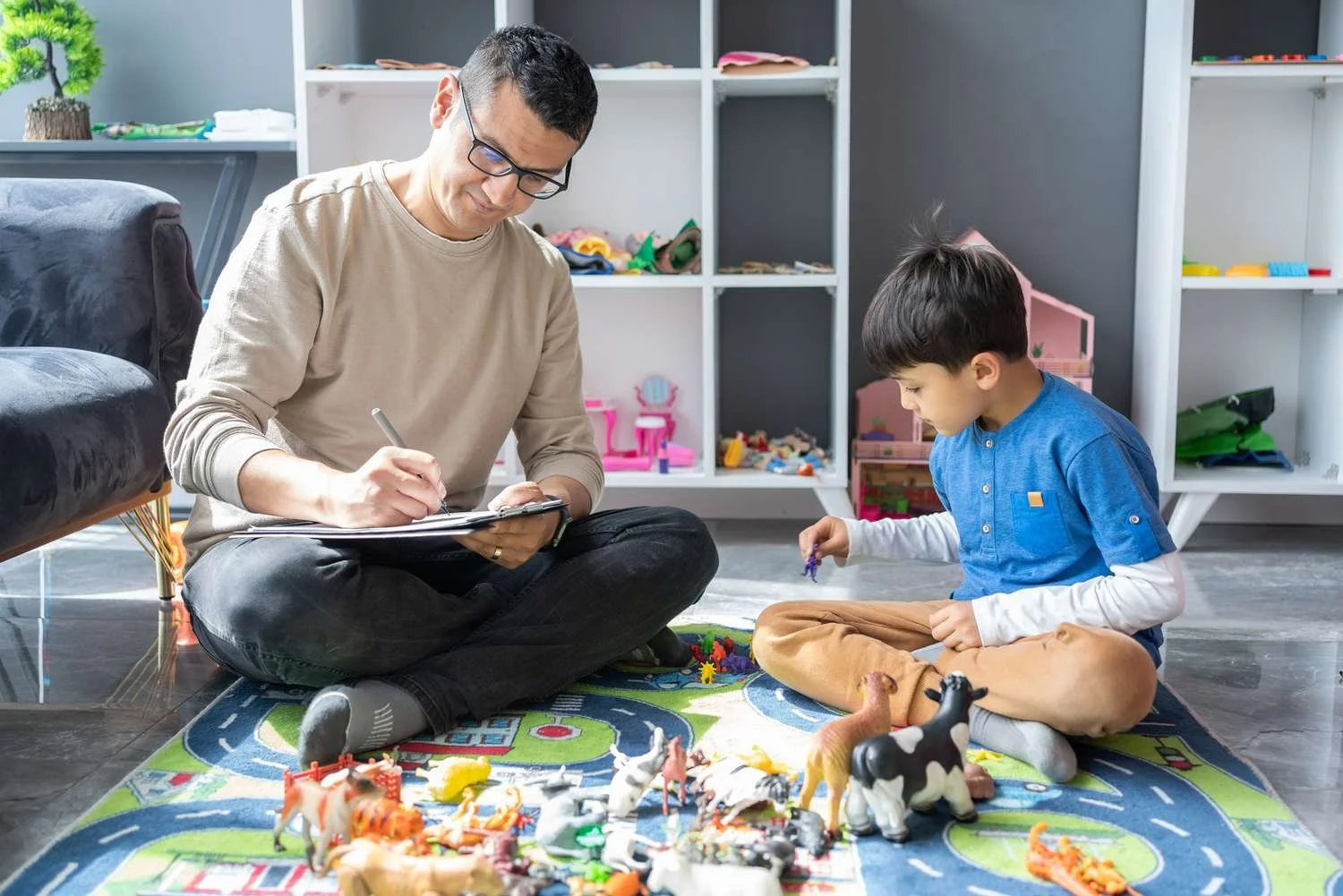
Extended relational work with the child and play-based approaches.
Reflective conversations with the child and adults supporting the child.
relational work that often unfolds over a longer period of time.
It is suitable when:
A child displays high levels of anxiety, emotional distress or behavioural dysregulation.
Complex emotional presentations that are difficult to understand through observation alone.
Trauma, loss or attachment-related concerns.
When it is likely take time to build trust and engagement.
A need to understand how a child experiences themselves, others and the world around them.
Parents or schools that value reflective discussions to build insight into a child’s internal world and develop ways of engaging with it.
Schools, parents or referring professionals require robust psychological formulation to inform complex SEN planning, therapeutic approaches or statutory process.
When ongoing therapy is an option following the assessment.

Child & Educational Psychology assessment
-
As an Educational Psychologist, I work with children, young people, families, schools, and a range of other professionals. I draw on my knowledge of psychology and child development to support children’s learning, development and well-being. I do this in a number of ways, for example:
Consultation
Assessment
Intervention/therapy
Training
Supervision.
This means that I work at different levels, sometimes working directly with children (e.g. an assessment to help understand a child’s individual learning and psychological needs or delivering an intervention with group of children) and sometimes working indirectly through systems of support around children (e.g. consulting or delivering training to parents, schools and professionals).
-
An Educational Psychology assessment provides a detailed, psychologically informed understanding of how and why a child or young person learns, develops and responds as they do in their home and educational environments. These assessments are often sought by parents, schools or other professionals when learning, emotional well-being or behaviour is causing concern. My role is to help make sense of the challenges a child may be experiencing, whether at school or at home, and find practical ways to support their progress, inclusion and well-being. It brings together different sources of information and perspectives to develop a shared psychological understanding that helps adults respond more confidently and effectively to a child’s needs.
Through the assessment process, families, school and/or professionals typically gain:
A deeper, more compassionate understanding of a child.
Increased confidence in how to support learning, inclusion, relationships, development and well-being.
Clear, prioritised and practical recommendations.
A shared language for talking about strengths and needs.
Support that recognises both learning and emotional-relational development.
-
HOLISTIC, CHILD CENTRED & PURPOSEFUL: My work is guided by clear psychological formulation and a holistic view of development. This means that rather than focussing solely on test scores, diagnoses or labels, I take a ‘whole-person’ approach and consider a number of factors influencing a child’s development. For example, physical health, communication skills, cognitive functioning, social-emotional development and learning processes, alongside the child’s relationships, environment and lived experience. This keeps the focus on what will genuinely help this child, in this context, at this point in time!
COLLABORATIVE: Assessment is something I do with families, schools and professionals, not to a child. Parents, carers, school staff, professionals and importantly, the child or young person are all active contributors to the process. This collaborative approach helps create a shared understanding and increases the likelihood that recommendations feel meaningful, realistic and sustainable.
EMOTIONALLY & RELATIONALLY INFORMED: Whilst I take a holistic approach, my particular area of specialism is in considering the emotional and relational aspects of learning and development. This can involve paying attention to aspects of a child’s experience that they may not fully understand and are not yet able to put into words. I support parents, carers, school staff and professionals to understand how emotions, anxiety, behaviour and relationships can shape learning outcomes and development over time.
-
When might an Educational Psychology assessment be helpful? Adults often seek an assessment when there is a sense that something is not quite fitting, even if concerns are difficult to put into words. An assessment may be helpful when:
A child’s progress does not reflect the effort they are putting in.
Learning appears effortful or distressing despite appropriate teaching and support.
Emotional responses such as anxiety, frustration, avoidance or shutdown are affecting learning and relationships.
There are ongoing concerns about attention, regulation or behaviour.
Previous intervention have had limited impact.
Adults hold different views and would value a shared understanding.
A child’s confidence or self-esteem is being affected.
Rather than being a last resort, assessment can provide a pause for reflection, allowing adults to understand a child more deeply before further support is put in place.
Timing matters. Difficulties that are not well understood - particularly emotional responses to learning and relationships - can become entrenched over time. An assessment may be especially valuable:
When concerns feel persistent rather than situational.
At points of transition, when expectations are increasing.
When emotional or behavioural responses are intensifying.
When adults feel stuck, unsure or worried about getting it wrong.
Early, emotionally-informed understanding can help prevent unnecessary escalation and support children before patterns become harder to shift.
-
Whilst every assessment is tailored to the child and the questions being asked, it usually involves a combination of the following:
Initial conversations with parents/carers, school staff or other referring professionals to understand concerns, strengths, priorities and plan what happens next. Adults may be asked to complete questionnaires or provide further information.
Reviewing any previous professional reports.
Time spent with the child or young person, using developmentally appropriate activities, discussion, and where helpful, standardised psychological tools.
Observation of learning, interaction and emotional responses.
Careful integration of information from home, school, assessment data and the child’s own perspective
Discussion of findings and collaboratively planning support and next steps
Review
The process is paced to ensure that the child feels safe, understood and able to show their strengths and concerns. Assessment is viewed as a process of understanding, not a one-off testing session. Therefore, assessment can sometimes unfold over a period of time.
-
A report is designed to be a practical and flexible document that can be used in different ways, depending on a child’s needs and circumstances. For example, it may be used to:
To summarise key points and help parents and schools develop a shared, psychologically informed understanding of a child.
Support transition planning between classes, schools, phases of education, or home environment.
Inform targeted interventions focussed on learning, emotional well-being or behaviour.
Support planning and review of school-based SEN support.
Contribute psychological advice as part of statutory processes, e.g. Education, Health, Care needs assessment.
Reports aim to be clear, accessible and grounded in real-world contexts, helping adults move from uncertainty to confident, emotionally and relationally informed support.
-
All involvement begins with an initial consultation and planning appointment. See below for more information about the assessment process.
An initial consultation appointment can be scheduled directly via links on this page.
The Assessment Process
-
![Child & Educational Psychology Assessment]()
1. Initial consultation & assessment planning
The process begins with an initial conversation with parents/carers and, where appropriate, school staff or professionals. This can be done in person or online.
This provides space to explore current concerns, priorities, what has been tried, clarify the key questions the assessment should help answer, and check an assessment is most appropriate now. Sometimes, next steps might be agreed or recommended from this initial discussion, and could include referrals to others services, school intervention programmes or specific strategies to try at home/school. In this case, it might be felt there is enough support to try for now and a date agreed to review before proceeding to further assessment.
This stage ensures that the assessment is purposeful and clearly focused, rather than routine or test-led.
-
![Child psychology assessment in Norwich, Norfolk]()
2. Information gathering
Information is gathered from a range of sources, which in addition to a referral form and initial adult conversations already taken place, may include:
> Adult or child questionnaires.
> Observation of the child or young person in their home and/or school setting.
> Time is spent with the child or young person to gain their views and engage in a range of activities and/or standardised tools. How often depends on the child’s capacities and the purpose of the assessment (e.g. a specialist therapeutic social-emotional assessment will likely involve 2 - 4 sessions). This is paced and adapted to the child’s age and development.
This collaborative approach and drawing information from a number of sources helps build a rounded picture of the child within their everyday environments.
-
![Child & Educational Psychology assessment]()
3. Psychological formulation
Information from all parts of the assessment is brought together through psychological formulation and knowledge of child development. This involves making sense of, for example:
> Cognitive strengths and weaknesses
> Behaviour as communication
> The impact of relationships and environments
-
![Child psychology assessment in Norwich, Norfolk]()
4. Discussing findings & planning support
Findings are discussed and reflected upon with key adults to build a shared understanding of the child. It might be necessary to meet more than once (e.g. a specialist therapeutic social-emotional assessment may involve meeting 2 - 3 times over time). Consideration is given to what feels most important and where possible practical ideas for support are developed together and how these can be implemented in the home and/or school environment. If time is limited, further recommendations are provided in a report.
-
![Child & Educational Psychology Assessment]()
5. A written record
A written record or report is provided. The level of detail and comprehensiveness varies depending on it’s purpose. In general it will usually set out:
> A psychologically informed understanding of the child.
> Key strengths and needs.
> Clear, prioritised and practical recommendations.
-
![Child psychology assessment in Norwich, Norfolk]()
6. Review
Sometimes a follow-up appointment can be scheduled to review a child’s progress and response to support put in place.





Frequently Asked Questions
Still have questions? Take a look at the FAQ or reach out anytime. If you’re feeling ready, go ahead and schedule an appointment.
-
An educational psychology assessment focusses on understanding how a child learns and develops, what hinders and facilitates these processes, as well as how they think and feel within their everyday settings. While diagnostic tools may be used where appropriate, the primary aim is to build a psychologically informed picture that guides meaningful support, rather than seek to label alone.
-
No. My approach prioritises understanding over labelling. Any frameworks or terminology used are intended to support clarity and access to appropriate support, not define or limit a child.
-
The assessment process typically unfolds over several stages, allowing time for careful observation, reflection and collaboration. This helps ensure that the outcome feels thoughtful, accurate and genuinely helpful. The process is clarified further below.
-
Absolutely, collaboration is central to my work. Parents, carers, school staff and children themselves are all active contributors to the assessment process.
-
Yes. Where appropriate next steps, strategies and interventions will be developed and agreed together. Further recommendations are clear, prioritised and realistic, and are designed to support learning, inclusion, emotional well-being and confidence with the school and/or home setting.
-
Yes. Usually the focus might be more on understanding a child’s behaviour or ways of relating to people in the home. It could include observations at home instead of at school, and depending on the level of concern, a more specialist therapeutic social-emotional assessment might be helpful. Sometimes it can still be helpful to involve school to check there are not similar concerns in school or that a school or learning issue is not underlying a child’s presentation at home.